Joinery on the Northern Beaches: the housing stock
Northern Beaches homes range from mid-century beach houses and fibro cottages through to newer architect-designed coastal homes. There are also plenty of interwar bungalows around Manly and Balgowlah, and a lot of apartments in Dee Why and Manly. Across all of them, indoor-outdoor living and natural materials are a strong part of how people want their homes to feel.
Salt air and humidity are a real, practical consideration for joinery here, more than almost anywhere else in Sydney. A kitchen a few streets back from the beach lives with moist, salty air for most of the year, and a house with bifold doors opening to the deck lets that air straight in. Material and hardware choice matter more as a result.
The land itself adds another layer. Suburbs like Freshwater and Seaforth are hilly, so split-level homes, internal staircases and steep driveways are common. That affects both how the joinery is designed and how it gets into the house.
Common joinery challenges on the Northern Beaches
Coastal humidity and salt air
Moisture gets into any exposed board edge, and salt attacks cheap metal hardware. For homes close to the water we choose hardware and finishes with corrosion resistance in mind. Carcasses are moisture-resistant board with every edge sealed or edged, and we use HMR board in kitchens, laundries and bathrooms. Inside a well-ventilated house, quality hinges and runners from Blum, Hettich or Häfele perform well. In semi-outdoor areas we move to marine-grade stainless steel wherever it's available.
Indoor-outdoor integration
Many renovations connect the kitchen and living joinery to an outdoor entertaining area through a servery window, stacking doors or a bench that runs out to the deck. At that boundary the material choice changes: joinery that is fine indoors can swell, fade or corrode once it sees rain and direct sun. We draw a clear line in the design between the indoor cabinetry and anything exposed to weather, and specify each part for the conditions it will actually face.
Split levels and steep blocks
The hilly topography around Freshwater, Seaforth and Balgowlah often means working around split levels and staircases. Joinery may need to step with a change in floor level, or sit beside a stair where the wall height changes along its length. We measure each level separately and check the carry path, because a long walk from the street down steep stairs changes how large each section can be.
Sand, wet gear and busy entries
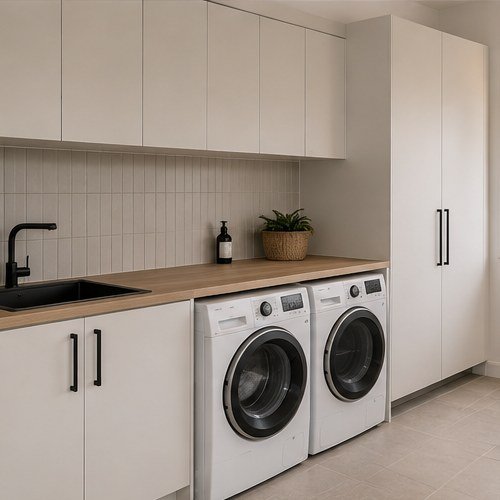
Beach life brings sand, wetsuits, boards and towels through the house. The joinery that handles this well is practical: an entry or mudroom bench with open cubbies and hooks, and a laundry with a deep sink, hanging space and ventilated cupboards for damp gear. We keep surfaces in these spots hard-wearing and easy to wipe down.
Choosing materials for coastal homes
There isn't one right answer, and your distance from the water matters. As a general guide:
| Finish or material | Indoors near the coast | Semi-outdoor or alfresco | Notes |
|---|---|---|---|
| 2-pac polyurethane | Performs well | Covered areas only | Fully sealed surface; chips need a professional touch-up |
| Quality laminate (Polytec, Laminex) | Performs well | Not recommended | Tough and cost-effective; edges must be well sealed |
| Timber veneer | Good with a quality clear coat | Not recommended | Warm look; keep away from direct sun and splashing |
| Compact laminate | Good | Good | Solid, waterproof panel suited to outdoor kitchens |
| Marine-grade stainless hardware | Optional | Recommended | Costs more but resists salt corrosion |
In practice, 2-pac and quality laminate with corrosion-resistant hardware generally perform best close to the coast. Laminate is the cheaper and tougher option, but it won't look like sprayed 2-pac up close. We advise on the right combination for your block during the consultation.
What we build most on the Northern Beaches
Most of our work here is kitchens and cabinetry for coastal renovations and new builds, wardrobe fit-outs in split-level homes, and material selection advised with coastal conditions in mind.
Indoor-outdoor kitchens
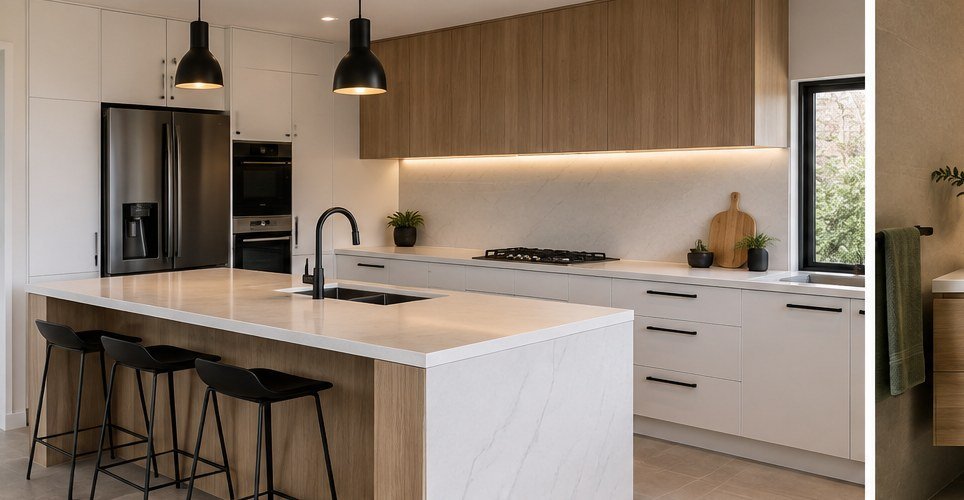
Custom kitchens with servery windows, long islands facing the deck and storage for outdoor entertaining gear.
Wardrobes in split-level homes
Built-in and walk-in wardrobes planned around sloping ceilings, stair voids and changes in floor level.
Coastal bathrooms
Bathroom vanities in HMR board with sealed edges, wall-hung where possible to keep water off the carcass.
Laundries and mudrooms
Laundry joinery with ventilated storage for wet gear, and entry benches for bags, boards and shoes.
We also build entertainment units for living rooms that open onto the deck, and one-off custom cabinetry such as window seats and built-in bar storage. See the kinds of rooms we build on our example projects page.
Suburbs we cover on the Northern Beaches
These are the suburbs we work in most often. We also cover the surrounding Northern Beaches, so get in touch if yours isn't listed.
- Manly: apartments, Federation and interwar houses, and newer homes between the harbour and the ocean, where salt air is a daily factor.
- Freshwater: steep streets and beach houses, with split levels and long stairs common.
- Seaforth: hillside homes above Middle Harbour, often multi-level with large glazed openings to the view.
- Dee Why: a high share of apartments and strata buildings close to the beach, plus older family homes.
- Balgowlah: established family homes, including interwar bungalows, on streets that run from flat to steep.
- Avalon: mid-century beach houses and architect-designed homes on leafy blocks, with a strong preference for natural timber.
- Mona Vale: family homes on flatter blocks near the beach, often renovated with larger open-plan kitchens.
- Narrabeen: homes near both the lake and the ocean, where humidity is a year-round consideration.
We also regularly work on the North Shore and across the rest of Sydney. The full list is on our service areas page.
Strata, council and access notes
Joinery on its own rarely needs a development application. Replacing a kitchen, vanity or wardrobe inside a house is generally internal work without council approval, as long as structural walls aren't being removed. Outdoor kitchens attached to a new deck or structure can be different, because the deck or roof may need approval, so check with Northern Beaches Council or your builder if the joinery is part of new outdoor works.
In Manly and Dee Why apartments, internal works often need strata approval, and install days are set by the building. Before we arrive we usually need:
- Strata or building manager approval for the works, where required
- A lift or loading booking, plus any rules for protecting common areas
- A certificate of currency for our insurance if the building requests one
- Parking near the entry, which in beachside streets on a summer weekend is hard to find, so we book weekdays where possible
- For steep blocks, a clear carry path and any stair measurements confirmed at the site visit
Planning your Northern Beaches project
Free consultation and in-home measure
We measure each level, look at how the house opens to the outside, and note how close you are to the water.
Design, shop drawings and 3D concept
We prepare the layout and a 3D concept, with a material and hardware schedule suited to your conditions.
Written, itemised quote
A written quote lists cabinetry, finishes, hardware and installation separately.
Manufacture in our workshop
Typically 4 to 8 weeks from sign-off. Laminate is fastest, 2-pac and timber veneer take longest.
Installation and adjustment
We install, scribe and adjust on site. Plumbing, electrical and gas are done by licensed trades we coordinate.
Handover
We check everything with you and explain how to care for your finishes in coastal air.
A full kitchen renovation commonly takes 12 to 20 weeks end to end. Marine-grade hardware and outdoor-rated materials can add cost and a little lead time, so we flag them early in the quote.
For indicative 2026 Sydney pricing, see our joinery cost guide, and for general questions, visit the FAQ page.